Perspectives
User retention is an infrastructure problem

Mit Shah
Co-founder & COO


Table of contents
User retention is an infrastructure problem
Most industries have some universally uncomfortable truths. If you raise money for a startup you know most investors will ghost you. If you teach at a university you know most of your students are writing with LLMs. If you work customer support you know the angriest callers often have the most useful feedback.
And if you run a finance app you know that most new users have short attention spans.
It’s no use getting mad at the users, of course. There are a lot of apps. Who’s to blame them for dropping yours? What you can do, if you are on a product team, is think of ways to solve the retention problem.
There are two basic categories of what you can do to keep users coming back. The first category is things that are actually feasible. Onboarding nudges. Reducing time-to-value by populating whatever you can. Create little badges for users when they link accounts, add progress bars, gamify everything. If you are a competent PM team you probably already do these things, or at least you have thought about them.
Then there is the other category: things you wish you could do but are impossible. For example, what if as soon as somebody signed up for the first time the app dashboard was entirely personalized? What if all their accounts were connected automatically? What if they could schedule payments on debts, like their credit card or student loans, directly from the app? These are the things that companies that later became our customers—Cleo, Vola, Ditch, and others—told us they would like to be able to do.
The problem is you cannot actually do this second category of things. Because the infrastructure doesn’t exist. If you wanted a personalized dashboard for a user the second they signed up, you would first have to tell your engineering team to build a financial connectivity company.
…or you could just use Method.
Better connectivity means better ways to retain users
With Method, all someone has to do is enter their name and phone number to instantly link all of their liability accounts. And then, once they have linked them, they can authorize payments to those accounts directly from your app—there’s no need to go anywhere else.
It is always fun to see eyes light up when we say this in meetings with product teams.
“Oh, well, if that’s true, then…”
Right now, you can probably think of 100 ways to implement this. But, to make things concrete, we wanted to share a few examples of how Method customers use our connectivity to retain more users.
Vola turned a dashboard into a subscription driver
Vola is a personal finance app for people who are traditionally underbanked. A real portion of what they do revolves around showing users what debts they have and helping them pay them off. The problem, perhaps obvious, is that showing people all of their liabilities in one place is hard: it generally relies on the user to know what debts they have and manually connect them.
And so, if you are someone who is underbanked and who may not be aware of the status of all of your debts, an app that asks you to do all of this work upfront is an app you may consider churning from.
Vola wanted to build out a real-time Loan Dashboard that could show all of this information to their customers at a glance. This, they thought, would add a lot of value (and increase retention).
Couldn’t they just use credit reports? The issue is that credit report data is not real-time. It can be up to 60 days old. The “real-time dashboard” becomes a “sort of useful but also inaccurate dashboard.”
So, with Method’s connectivity, Vola built a Loan Dashboard that pulls real-time balances, interest rates, and payment dates for every liability a user has. The user enters their name and phone number and the whole thing populates; no credentials or manual entry.
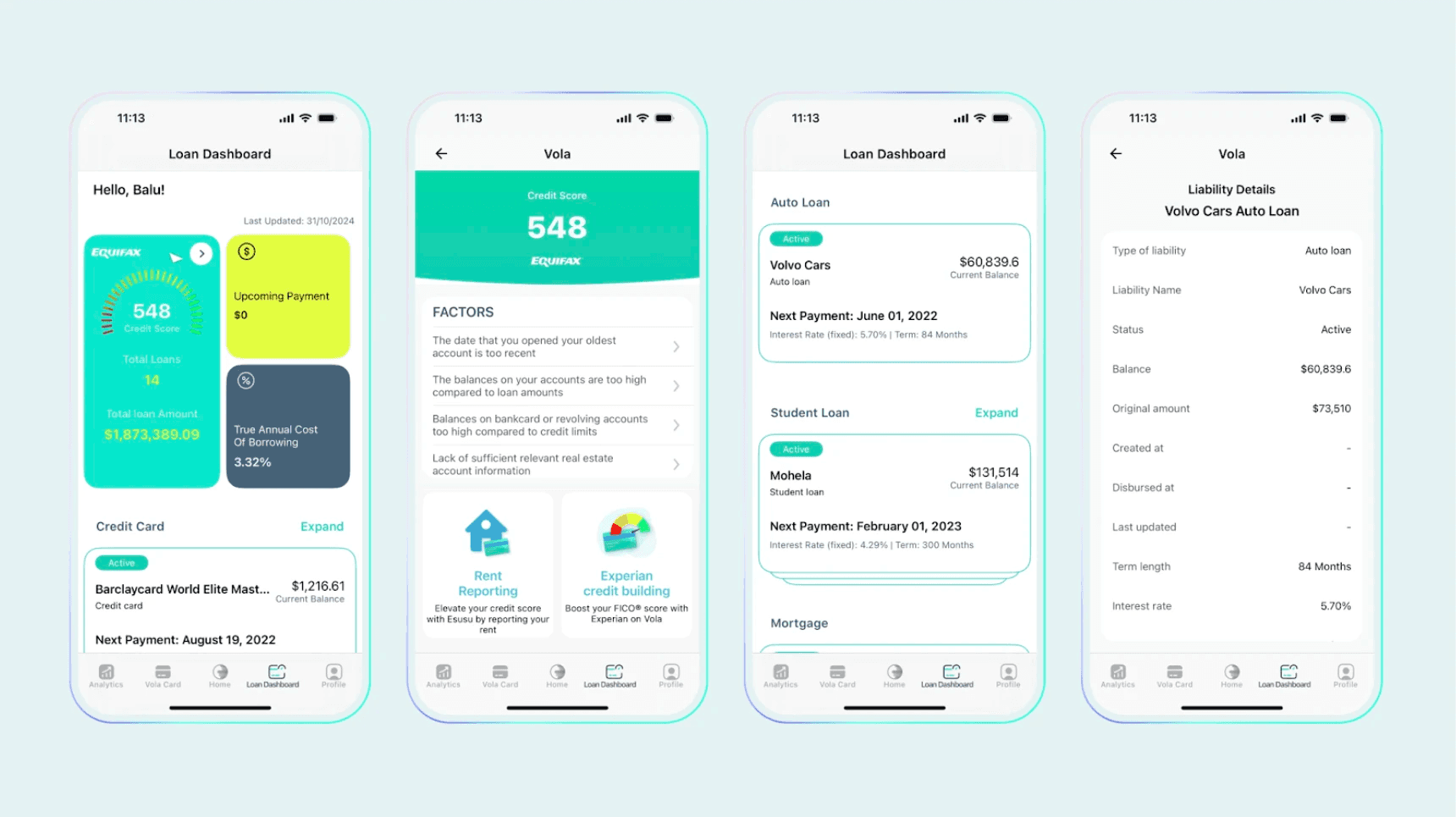
As a result:
Users spend 50% more time in the app
Users open the app 20% more often
28% of users subscribe to the Method-powered subscription plan (at $3/mo)
Ditch made debt payoff automatic, and users stayed
Ditch is a small team building an app that automates debt repayment. The idea is simple: connect your debts, set a strategy, and Ditch handles the rest (including things like round-ups from daily spending).
The hard part for retention was the infrastructure. In order to help users automate their debt payments, Ditch first had to connect to those users’ accounts. And every additional account Ditch asked users to connect was another point of friction and another reason to churn. Unfortunate, because adding as many accounts as possible (ideally, all of your accounts) is how someone would get the most out of Ditch.
So there was this great idea (help people pay off debt!) bogged down by reality (connectivity is bad).
With Method, Ditch fixed both the account connectivity and the payment rails. Now users link all their debts in seconds, see real-time balances, and payments go out automatically in the background. Now the app can fulfill the thing it wanted to promise for so long.
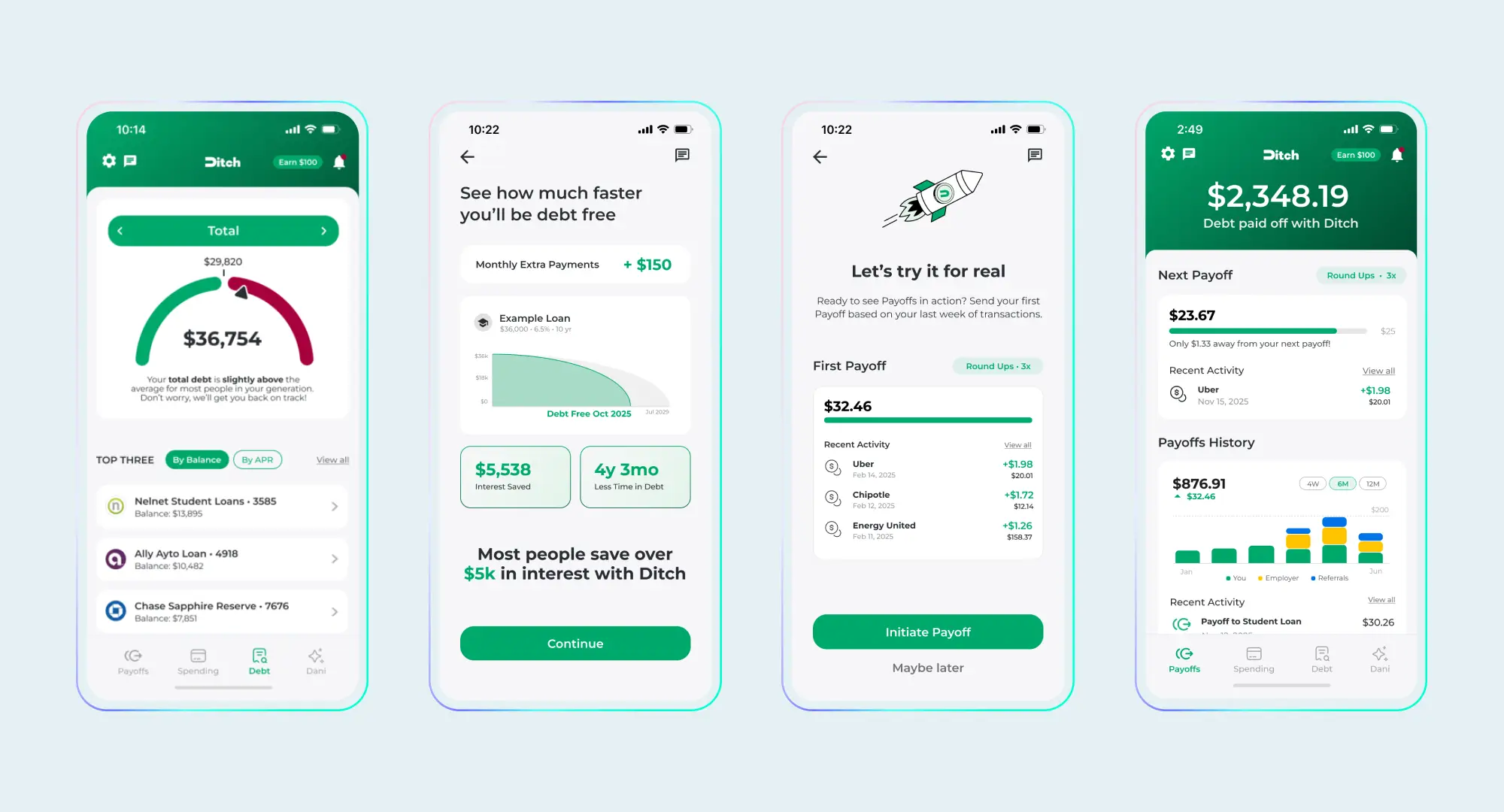
The numbers say a lot:
85% of users come back MoM
30% of active users adopted Method-powered payment features
Users make 14 payments per year on average
With Method’s connectivity, Ditch improved retention as far upstream as possible: the infrastructure layer.
Cleo created personalized debt action plans
Cleo is an AI-powered financial assistant. If you use Cleo you probably do so because you want to get better control over your finances and make smarter decisions. You may point out that Cleo is not the only app who wants to help these users. That is true. So, if you are Cleo, how do you stand out?
One idea the team at Cleo had was to build a feature called Debt Reset: a dashboard that could pull all of their users’ liabilities into one place, in real-time, and create an action plan. (The theory was that this would be significantly more useful than generic advice, or asking users to enter details manually.)
With Method, Debt Reset was finally possible. Users just enter their name and phone number, and Debt Rest populates. Every eligible debt, categorized and current, ready to be turned into a plan.
2% uplift in one-month retention rate (sounds small to non-product people, but it’s a lot)
60% (800k+) of eligible users engaged with Debt Reset in the first week
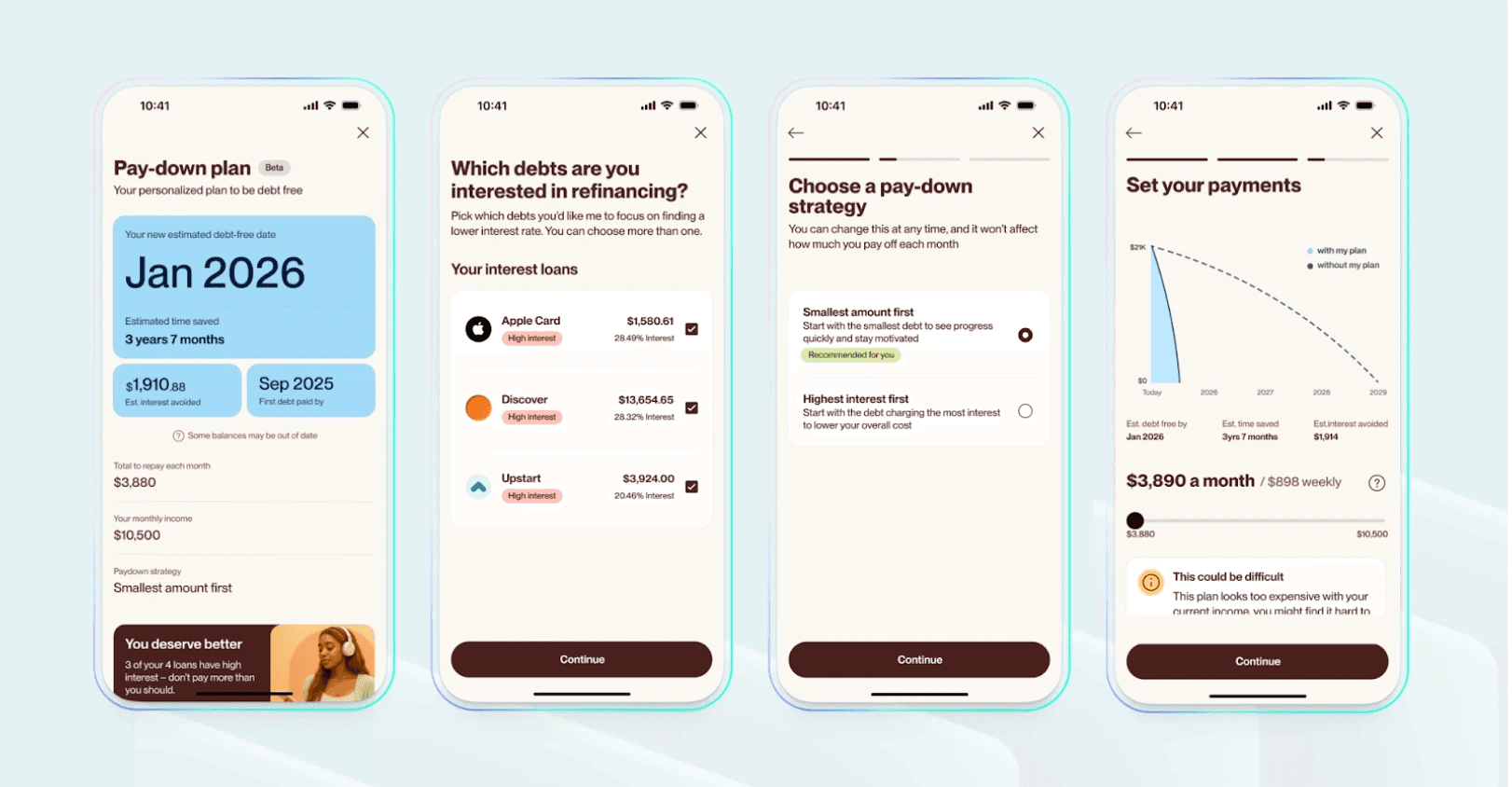
There’s one approach to increasing retention (and revenue) where you look for ways to tweak the app you already have. There’s another where you use new technology (in this case, Method) to build new features that simply make your product more valuable for its users. In Cleo’s case, the latter has paid off.
Chat with Method to brainstorm retention ideas for your app
Book a demo with us at Method and we’ll be happy to brainstorm useful ways we can leverage Method’s real-time connectivity and embedded payments to increase retention on the app you’re working on.